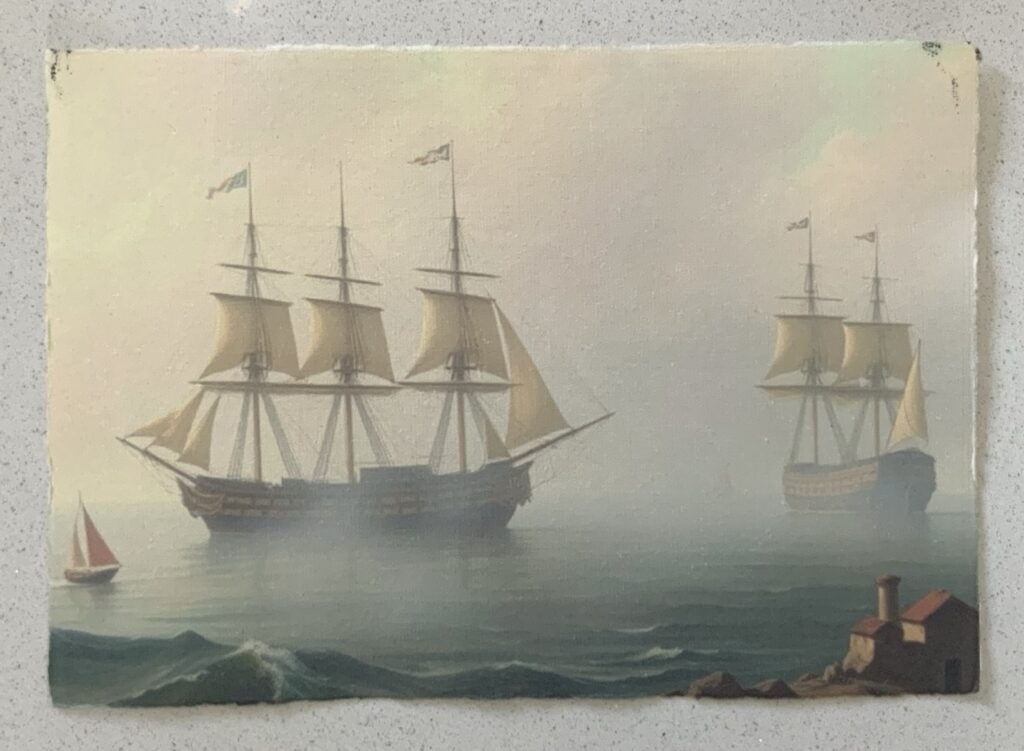
The History Behind 19th Century French Trial Proof Prints
Have you ever wondered about the hidden layers of creativity behind a finished masterpiece? What if you could peer into an artist’s mind, witnessing their struggles, experiments, and triumphs, brushstroke by brushstroke, or rather, impression by impression? This is precisely the privilege offered by 19th Century French Trial Proof Prints – fascinating echoes of an artist’s intimate journey, far more than mere preliminary sketches.
For art enthusiasts and collectors alike, these unique prints represent a vital window into the evolving landscape of one of printmaking’s most dynamic eras. But what exactly are they, and why do they hold such profound historical and artistic significance? Let’s embark on a journey through the studios and salons of 19th-century France to uncover the compelling story behind these rare and revealing works of art.
What Exactly is a Trial Proof Print?
To truly appreciate the history and value of these objects, we must first answer a fundamental question: What is a trial proof in printmaking?
In the simplest terms, a trial proof (or épreuve d’essai in French) is an impression pulled by an artist or printer from a plate, block, or stone during the creative process, before the work is considered finished and ready for the main edition. Unlike a standard print from a final edition, a trial proof is an experimental print. It’s a test run, a working document, pulled to allow the artist to assess the progress of their work, identify areas for improvement, and make necessary adjustments to the matrix (the copper plate for an etching, the lithographic stone, or the woodblock).
Imagine an artist meticulously working on an etching. They might make an initial drawing on the plate, then apply acid, and then pull a trial proof to see how the lines have bitten. Are they too faint? Too dark? Has a certain detail been captured as intended? They might then re-work the plate, perhaps adding more detail, scraping away lines, or applying more acid for deeper tones, before pulling another trial proof. This iterative process could involve multiple trial proofs, each one a unique “state” of the plate, reflecting successive stages of the artist’s decision-making.
This distinguishes trial proofs from other types of proofs:
- Artist’s Proofs (A.P. / Épreuve d’artiste): These are impressions pulled from the finalstate of the matrix, outside of and in addition to the numbered main edition, reserved for the artist’s personal use or sale. They represent the completed vision.
- State Proofs: Similar to trial proofs in that they show different stages, but “state” often implies a more distinct, catalogued change to the matrix that can be replicated. Trial proofs are often more informal and unique tests.
- Printer’s Proofs: Impressions made for the printer, often to verify quality or for their own collection.
- Bon à Tirer (B.A.T. / “Good to Pull”): The final proof approved by the artist, serving as the definitive standard for the entire edition.
Trial proofs are often characterized by their unique variations, annotations (pencil notes, corrections, or signatures indicating “essai” or “trial”), and sometimes, their smaller dimensions or use of different papers, as they were not intended for public sale in their unfinished state.
Why Were Trial Proofs Made in 19th-Century France?
The 19th century was a period of immense artistic and technological transformation in France, one that saw printmaking ascend to unprecedented heights of popularity and artistic expression. This dynamic environment naturally fostered the widespread creation of trial proofs.
From Romanticism to Impressionism: An Artistic Revolution: French art in the 19th century was a vibrant tapestry of movements. It began with the emotional intensity of Romanticism (Delacroix, Géricault), moved through the gritty realism of Courbet and Daumier, and blossomed into the radical light and color of Impressionism (Manet, Degas, Pissarro, Morisot). Towards the end of the century, Symbolism and Post-Impressionism (Redon, Toulouse-Lautrec) further expanded artistic horizons.
Printmaking, particularly etching and lithography, proved to be an incredibly versatile medium for these diverse artistic explorations. It offered artists the ability to disseminate their work more widely, experiment with new visual languages, and even critique society (as seen in Daumier’s satirical lithographs). The explosion of illustrated books, journals, and art publications further fueled the demand for prints, elevating the status of printmakers.
Technological Advancements and the Revival of Etching: While etching had existed for centuries, the 19th century witnessed a significant revival, particularly in France. Artists and printmakers experimented with new acids, grounds, and papers, pushing the expressive boundaries of the medium. The Société des Aquafortistes (Society of Etchers), founded in Paris in 1862 by Alfred Cadart, played a pivotal role in this revival, promoting original etchings by contemporary artists and publishing portfolios that reached a wider audience.
Lithography, invented at the very end of the 18th century, matured rapidly in the 19th century. Its painterly qualities and the ease with which artists could draw directly on the stone made it immensely appealing to artists like Daumier and Toulouse-Lautrec. Both etching and lithography, by their very nature, were processes of accretion and deletion, requiring careful adjustments and, consequently, numerous trial proofs. Unlike painting, where changes can be made directly on the canvas, printmaking often requires pulling an impression to fully visualize the effect of an alteration to the matrix.
The Artist’s Laboratory: Why Artists Made Trial Proofs – A Glimpse into the Creative Process.
The primary reason for pulling trial proofs was, and remains, the artist’s need for control and refinement. Think of it as the artist’s “laboratory” – a space for vital experimentation.
- Mastering Technique: Printmaking is a highly technical art form. Etching involves acid and metal, lithography involves grease and water, and wood engraving requires precise carving. Each process has its nuances. Trial proofs allowed artists to test their technique:
- Etching: Were the lines bitten deep enough? Was the aquatint (a tonal etching technique) creating the desired grainy texture or tone? How did different stages of stopping out and re-biting affect the image?
- Lithography: Was the drawing on the stone transferring correctly? How did different lithographic crayons or washes appear when printed?
- Drypoint: Was the burr (the raised ridge of metal created by the drypoint needle) holding enough ink to create that characteristic velvety line?
- Developing Composition and Tone: A blank plate or stone doesn’t always reveal the full impact of an image. Pulling a proof allowed artists to step back and evaluate the composition, balance, and tonal range. They could assess:
- The play of light and shadow.
- The depth and perspective.
- The overall mood and atmosphere.
- The precise placement of figures or objects.
- Iterative Refinement: Printmaking is an inherently iterative process. Artists would often work on a plate in stages, making small changes, pulling a proof, evaluating, making more changes, and pulling another proof. These sequential trial proofs document the evolution of an artwork, sometimes showing radical shifts in design or subtle enhancements that reveal the artist’s meticulous attention to detail. This often involved:
- Adding or removing details.
- Strengthening or lightening lines.
- Altering backgrounds or foregrounds.
- Experimenting with different printing inks or papers to achieve varied effects.
For the artist, each trial proof was not just a test; it was a conversation with their work, a critical dialogue that ultimately led to the final, perfected image.
Key Figures and Their Engagement with Trial Proof Prints in 19th-Century France
Many of the giants of 19th-century French art relied heavily on trial proofs in their printmaking endeavors. Examining their practices illuminates the importance of these working documents.
- Eugène Delacroix (1798–1863): A master of Romanticism, Delacroix was an avid printmaker, particularly in lithography and etching. His dramatic and expressive prints, often illustrating literary works, frequently involved extensive trials to capture the intense emotions and complex compositions he sought. His proofs reveal his quest for dynamic movement and chiaroscuro effects.
- Honoré Daumier (1808–1879): The unparalleled satirist and realist, Daumier produced thousands of lithographs for Parisian newspapers. Given the rapid pace and volume of his work, trial proofs were essential for him to ensure the legibility and impact of his caricatures and social commentaries. His proofs often show corrections, textual additions, and adjustments to facial expressions.
- Jean-François Millet (1814–1875): Known for his portrayals of peasant life, Millet’s etchings often captured the dignity and toil of rural existence. His trial proofs demonstrate his careful development of light, shadow, and texture to evoke the atmosphere of the French countryside.
- Édouard Manet (1832–1883): A pivotal figure in the transition from Realism to Impressionism, Manet was also a significant printmaker. His etchings and lithographs (including illustrations for Edgar Allan Poe’s “The Raven”) frequently involved numerous states and trial proofs, showing his rigorous experimentation with line, tone, and stark contrasts, often reflecting his bold approach to composition.
- Edgar Degas (1834–1917): Degas’s innovative approach to printmaking, particularly his experiments with monotype and etching, led to a vast number of unique impressions and trial proofs. He often altered plates drastically between impressions, sometimes using them as foundations for entirely new works or adding color by hand. His proofs are a testament to his relentless pursuit of capturing fleeting moments and movements, often focusing on dancers and bathers.
- Camille Pissarro (1830–1903): A key Impressionist, Pissarro embraced etching to explore landscapes and genre scenes. His trial proofs reveal his meticulous efforts to capture the nuances of light and atmosphere through etched lines and aquatint, often showing subtle shifts in perspective or the addition of details to enhance the sense of place.
- James McNeill Whistler (1834–1903): Though American, Whistler spent significant time in Paris and was a major figure in the etching revival. His famous “Thames Set” and “Venice Set” of etchings are known for their numerous states, reflecting his obsessive pursuit of perfection and his nuanced use of line and empty space. His trial proofs are highly prized for showing his precise adjustments.
- Henri de Toulouse-Lautrec (1864–1901): The master of Belle Époque poster art and chronicler of Parisian nightlife, Toulouse-Lautrec’s lithographs are iconic. His bold use of line and color often involved trial proofs to perfect his compositions and ensure the graphic impact of his designs, especially for the demanding world of advertising.
- Odilon Redon (1840–1916): A Symbolist artist, Redon’s mystical and dreamlike lithographs and etchings are highly distinctive. His trial proofs illuminate his subtle creation of mood and his exploration of fantastical imagery, often showing the slow development of his ethereal chiaroscuro.
Identifying a 19th-Century French Trial Proof: A Collector’s Guide
For collectors, being able to identify a trial proof adds a layer of depth and excitement to their pursuit. While it often requires expertise, several hallmarks can help:
- Annotations and Inscriptions: The most telling sign is often a handwritten note by the artist or printer. Look for phrases like:
- Épreuve d’Essai (Trial Proof)
- Essai (Trial)
- Tirage d’Essai (Trial Pull/Impression)
- 1er État, 2e État, etc. (1st State, 2nd State, etc.) – indicating sequential changes.
- Notes on technique, corrections, or instructions for the printer.
- A signature, sometimes distinct from that on later, finished prints.
- Unique Variations and Imperfections: Compare the print to known final states of the artwork. Trial proofs will likely show differences:
- Missing elements that appear in the final state.
- Elements that are removed or altered in the final state.
- Differences in line work, shading, or texture.
- Sometimes, even a different scale or cropping.
- Minor plate damage or accidental marks that were later corrected.
- Paper Type and Quality: Trial proofs might be printed on different, sometimes less expensive, paper than the final edition, or on paper chosen randomly from what was available in the studio. However, some artists also used fine papers to accurately judge the ink’s appearance. Watermarks can sometimes help identify the paper’s origin and age.
- Edition Size (or Lack Thereof): Trial proofs are usually unique or produced in very small numbers (often one to five of a given state). They are rarely numbered like a regular edition.
- Plate Marks and Borders: Examine the plate mark (the indentation left by the plate pressing into the paper). Does it look consistent with other known prints by the artist? Are the margins generous or irregular?
- Provenance and Documentation: The history of ownership (provenance) and any existing documentation (gallery labels, auction records, scholarly cataloging) are crucial. A print listed in a reputable catalogue raisonné (a comprehensive, scholarly list of an artist’s works, often including different states and proofs) with a specific state description is a strong indicator of authenticity.
- Consult Experts: When in doubt, always consult a reputable print dealer, art historian, or auction house specialist who has expertise in 19th-century French prints. They can verify authenticity and provide valuable insights.
The Enduring Significance and Value of Trial Proof Prints
The allure of 19th Century French Trial Proof Prints extends far beyond their rarity. They offer an unparalleled connection to the artistic process and the mind of the creator.
- Intimate Glimpse into the Artist’s Mind: Owning a trial proof is like holding a piece of the artist’s thought process. It reveals their decisions, their struggles, their moments of inspiration and correction. It humanizes the creative journey, showing that even masters refined their work.
- Historical and Art Historical Value: Trial proofs are invaluable to art historians. They document the evolution of a print, allowing scholars to trace the artist’s technical and aesthetic development, understand their working methods, and even discern influences or stylistic shifts. They are primary source documents in the study of printmaking.
- Rarity and Uniqueness: By definition, trial proofs are unique or produced in very limited numbers. This inherent scarcity contributes significantly to their collectibility and value. Each one tells a slightly different story.
- A Unique Aesthetic: Sometimes, a trial proof, even in an unfinished state, possesses a raw energy or a stark beauty that is captivating in its own right. The absence of certain details or the presence of experimental marks can create an entirely different, compelling aesthetic.
- Investment Potential: As rare and historically significant objects, well-documented trial proofs by major artists can be significant investments, often appreciating in value as their importance becomes more widely recognized.
Conclusion: The Enduring Allure of the Unfinished Journey
The history behind 19th Century French Trial Proof Prints is a testament to the dedication, innovation, and relentless pursuit of artistic perfection that characterized one of printmaking’s most vibrant eras. These prints are not just historical artifacts; they are vibrant records of creative exploration, offering a unique opportunity to witness the birth of a masterpiece, stroke by stroke, impression by impression.
From the Romantic fervor of Delacroix to the Parisian nightlife of Toulouse-Lautrec, these trial proofs invite us to step into the artist’s studio, to understand their process, and to appreciate the profound artistry embedded in every stage of their work. For collectors and enthusiasts, they are more than mere prints; they are tangible links to the very heart of the artistic journey, encapsulating the trials, triumphs, and the enduring spirit of creation. To own one is to possess a secret, a whispered conversation with genius, forever frozen in ink and paper.