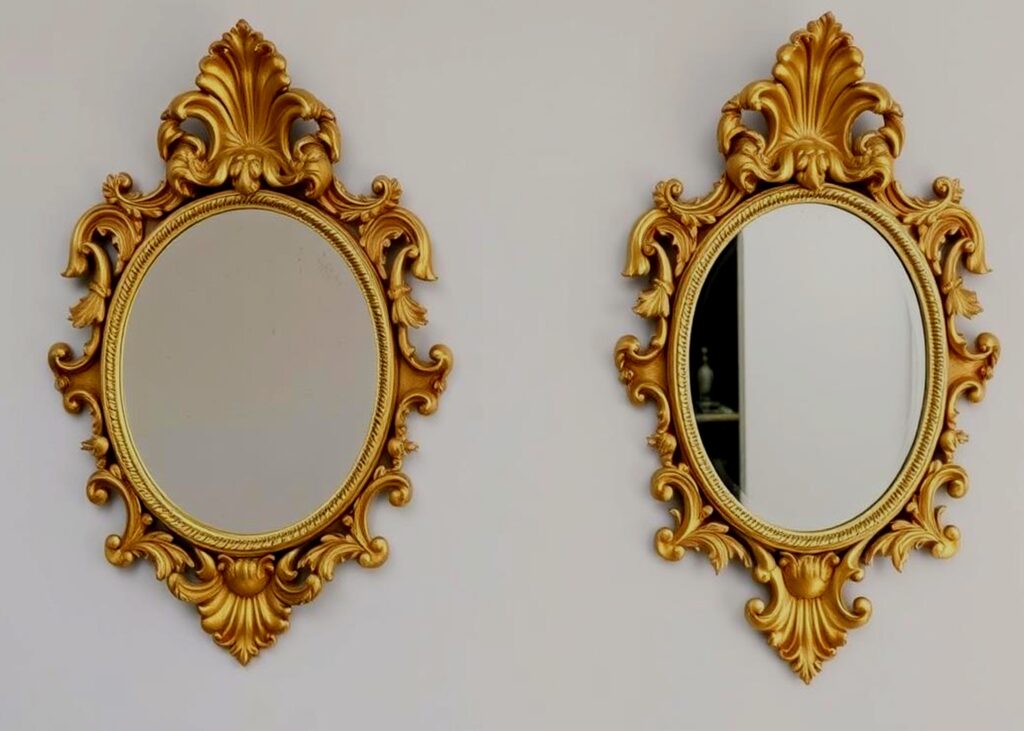
Recognising Genuine vs. Reproduction Rococo Mirrors
The Rococo era, a period of exuberant artistry and playful opulence, left us with some of the most enchanting decorative pieces imaginable. Among these, the Rococo mirror stands out – a symphony of swirling gilt, intricate carving, and often, a touch of whimsical charm. These mirrors aren’t just reflective surfaces; they are statements of style, windows into a bygone era of lavish interiors. But as with any coveted antique, the market is awash with both genuine treasures and convincing reproductions. For collectors and enthusiasts alike, learning to distinguish between the two is crucial. This guide will delve into the heart of Rococo craftsmanship, helping you recognise genuine vs. reproduction Rococo mirrors with confidence.
The allure of a Rococo mirror lies in its distinctive style. Characterised by asymmetry, flowing lines, and a light, airy aesthetic, Rococo design rejected the rigid formality of the Baroque. Instead, it embraced themes inspired by nature – shells, scrolls, foliage, and floral motifs – all rendered with a delicate, often exaggerated, elegance. Gold leaf was the material of choice, applied liberally to create surfaces that shimmered and captured the candlelight, amplifying the sense of luxury and visual delight. Understanding these core principles is your first step in deciphering authenticity.
The Tell-Tale Signs of Authenticity: A Deep Dive into Genuine Rococo Mirrors
Genuine Rococo mirrors are not mass-produced items. They are the product of skilled artisans working with time-honoured techniques. Examining the craftsmanship, materials, and even the subtle imperfections can reveal a mirror’s true age and origin.
1. The Gilt: A Living Surface
The gilding on a genuine Rococo mirror is a story in itself.
- Original Gold Leaf: Authentic Rococo mirrors are almost exclusively gilded with real gold leaf. This is a thin, delicate material that, over centuries, develops a unique patina. Look for subtle variations in tone, areas where the gold has slightly worn or faded, revealing the underlying gesso or wood. This isn’t damage; it’s the beautiful ageing of a precious material. Genuine gilt will have a warm, mellow glow, not the harsh, synthetic sheen of modern gold paint or spray.
- Application Technique: The gold leaf was applied over a layer of gesso (a mixture of chalk or gypsum and animal glue). On genuine pieces, you might see the subtle texture of the gesso beneath the gold, especially in carved areas where the gold has been pressed into crevices. The application might not be perfectly uniform, with slight overlapping or minor bubbles, which are hallmarks of hand-applied techniques.
- Patina and Wear: Over time, real gold leaf oxidizes and develops a rich patina. Corners and raised edges often show signs of wear, where the gold has been rubbed away by touch or the passage of time. This wear should look natural and organic, not like artificial distressing or sandblasting, which are common in reproductions.
2. The Carving: Nature’s Embrace, Masterfully Rendered
The heart of Rococo design lies in its intricate and often exuberant carving.
- Hand-Carved Detail: Genuine Rococo mirrors feature hand-carved elements. Look closely at the scrolls, leaves, flowers, and shell motifs. The carving should display a degree of variation and spontaneity, reflecting the artisan’s hand. Each leaf might have slightly different veining, each scroll a unique curl. There should be a sense of movement and fluidity, a dynamic interplay of light and shadow.
- Deep Relief and Undercutting: Authentic pieces often exhibit deep relief, with elements appearing to project significantly from the frame. Skilled carvers would also employ undercutting, creating distinct shadows and adding to the three-dimensional quality of the design. This depth is difficult and expensive to replicate authentically.
- Wood Choice: While gilded wood is typical, the type of wood used can also be an indicator. Older pieces might be carved from hardwoods like lime or beech, which were readily available and suitable for detailed carving. The wood itself might show signs of age, such as minor cracks or shrinkage, particularly around joints.
3. The Mirror Glass: A Window to the Past
The mirror itself is a crucial element.
- Early Glass Techniques: Rococo mirrors would have used glass produced using older methods. This often means the glass is not perfectly flat or clear by modern standards. Expect to see slight waves, imperfections, bubbles, or minor distortions in the reflection. These are not flaws but characteristic of early glass manufacturing.
- Silvering (Backing): The reflective backing of early mirrors was typically made of tinfoil and mercury. This process was delicate and prone to degradation. Genuine Rococo mirrors will often have a darkened, spotted, or mottled appearance to the silvering. This “age spotting” is a strong indicator of an original mirror. The backing might also be somewhat uneven or show signs of delamination in places.
- Edges: The edges of the glass were often cut with a bevel. Examine the bevel for signs of age – it might be slightly worn or have a subtle softening of the sharp edge.
4. Construction and Joinery: The Unseen Craftsmanship
Beneath the dazzling surface lies the structural integrity of the mirror.
- Traditional Joinery: Look for traditional joinery techniques. This might include dovetail joints, mortise and tenon joints, or simple pegged construction, depending on the era and specific piece. These methods are time-consuming and require skill, unlike the ubiquitous modern screws and glue.
- Wood Ageing: The underlying wood structure should also show signs of age. This can include shrinkage, expansion, and minor warping due to centuries of exposure to varying humidity levels. Old nails or screws, if visible, will be hand-forged or early machine-made, not modern, uniformly manufactured ones.
- Backing Board: The backing board (if present) will likely be made of age-darkened wood, possibly a simple plank or panels secured with older fixings.
5. Style and Proportion: Capturing the Rococo Spirit
Beyond the physical attributes, understanding Rococo styling is key.
- Asymmetry and Flow: Genuine Rococo mirrors are characterized by asymmetry and exaggerated curves. The design should feel dynamic, playful, and organic, rather than rigidly symmetrical or geometrically ordered.
- Motifs: Common Rococo motifs include stylized acanthus leaves, C-scrolls, S-scrolls, cartouches, floral garlands, shells (rocaille), and sometimes putti. The execution of these motifs should be delicate and flowing.
- Scale and Proportion: While Rococo mirrors can be large, their proportions should feel balanced and harmonious, even with their inherent asymmetry. A reproduction might feel “off” in its scale or the way elements are combined.
The Red Flags of Reproduction: What to Watch Out For
Reproductions are becoming increasingly sophisticated, employing modern techniques to mimic age. However, certain tell-tale signs can help you spot the imitation.
1. The Gilt: Too Perfect, Too Harsh
- Modern Gold Paint or Spray: A very common giveaway is the look and feel of the gilding. If it has a uniform, almost plastic-like sheen, it’s likely modern gold paint or spray. It might chip in a way that looks too clean or artificial.
- Unnaturally Perfect Surface: Genuine gilt rarely looks perfectly pristine all over. If the gold is flawless and uniform across the entire surface, especially on raised decorative elements, it’s a sign of a reproduction.
- Lack of Patina: The absence of genuine patina, wear, and oxidation is a major red flag. Reproductions often try to fake this with artificial distressing, which can look too uniform or scratchy.
2. The Carving: Too Uniform, Too Shallow
- Machine-Carved or Moulded: Reproductions frequently use moulded resin or plaster to create decorative elements, which are then gilded. These pieces will often feel lighter, lack the fine detail and variations of hand-carved wood, and may have mould lines visible.
- Shallow Relief and Lack of Undercutting: The carving might appear shallow, lacking the deep relief and intricate undercutting that adds depth and character to authentic pieces.
- Repetitive Patterns: Machine-made elements will often exhibit a perfect, repetitive pattern, lacking the subtle variations of handwork.
3. The Mirror Glass: Too Clear, Too Flat
- Modern Plate Glass: Reproductions almost invariably use modern, perfectly flat, and clear plate glass. There will be no waves, distortions, or imperfections in the reflection.
- Modern Silvering: The reflective backing will be uniform, clean, and free from the characteristic spotting and darkening of old mercury-backed mirrors.
4. Construction and Joinery: Modern Methods
- Visible Screws and Glue: The presence of modern screws, staples, or excessive amounts of modern glue are clear indicators of a reproduction.
- MDF or Plywood Construction: The underlying construction materials should be old wood, not modern engineered wood products like MDF or plywood, which were not available during the Rococo period.
5. Inconsistent Styling or Proportions
- “Cobbled Together” Designs: Sometimes, reproductions might combine elements from different periods or styles in a way that feels jarring or historically inaccurate.
- Exaggerated or Clunky Motifs: The decorative motifs might be overly large, poorly executed, or lack the graceful flow characteristic of genuine Rococo.
Special Considerations: Variations and the Bazaar Effect
- Later Reproductions: Be aware that there were periods of revival for Rococo styles in the 19th and early 20th centuries. Mirrors from these periods can be quite well-made and may even feature hand-carved elements and early forms of silvering. These are not “genuine” Rococo but can still be valuable antique pieces. They will often exhibit characteristics of their respective eras.
- “Bazaar” or Decorative Pieces: Many mirrors found in antique shops or online are decorative pieces made in a Rococo style rather than genuine antique Rococo mirrors. These are often mass-produced for decorative purposes and will lack the hallmarks of true age and craftsmanship. They can still be beautiful additions to a room but should not be mistaken for genuine antiques.
- Restoration: Genuine Rococo mirrors may have undergone restoration over their long lives. This is not necessarily a negative, but it’s important to understand the extent and nature of any repairs. For example, re-gilding with real gold leaf might be considered acceptable restoration, whereas replacing original carved elements with modern plastic would detract significantly from its value.
The Buyer’s Checklist: Putting Knowledge into Practice
When examining a Rococo mirror, use this checklist to guide your assessment:
- Feel the Gilt: Does it have a natural warmth and subtle variation? Are there signs of gentle wear?
- Inspect the Carving: Is it deep, detailed, and varied? Does it have a sense of movement?
- Examine the Mirror Glass: Are there any imperfections, waves, or age spots in the silvering?
- Check the Construction: Look for traditional joinery and old wood.
- Assess the Style: Does it embody the playful asymmetry and flowing lines of Rococo?
- Trust Your Instincts: If something feels too perfect, too uniform, or too “new,” proceed with caution.
Conclusion: The Enduring Charm of Authentic Rococo
Collecting genuine Rococo mirrors is a rewarding journey into the artistry and opulence of a bygone era. By understanding the materials, techniques, and stylistic nuances that define these exquisite pieces, you can confidently navigate the market and distinguish between true treasures and their modern counterparts. A genuine Rococo mirror is more than just a reflection; it’s a piece of history, a testament to skilled craftsmanship, and a captivating statement of enduring beauty. Approach your search with a keen eye, a curious mind, and an appreciation for the gilded illusions that continue to enchant us.